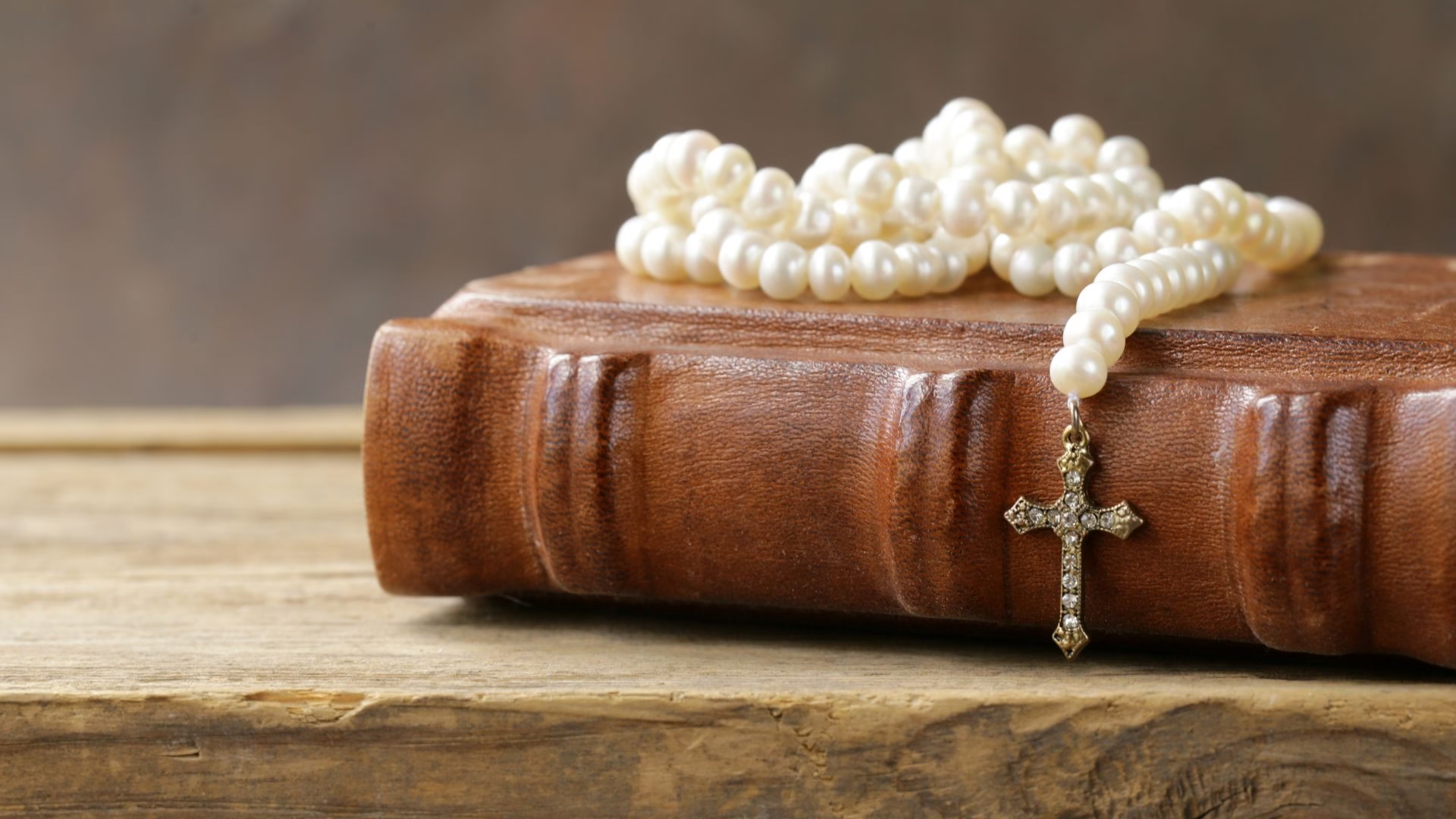
Your Christian home tells a story through the objects, symbols and images you choose. Here’s how to create a home that reflects what you truly believe.
I have a symbol above my desk.
It comes from a traditional Maltese fishing boat, called a luzzu, and it means everything to me. Malta is where I lived for eight years. Where I became Catholic. Where I got married. Where my children were born. To me, that symbol is Malta. It is family, faith and home in one small image. But I also know that to someone else, it might look like an evil eye.
And that is actually a perfect place to start this conversation.
As an interior designer, I spend a lot of time thinking about what we choose to put into our homes. Usually we talk about colour, furniture, layout, storage and how a room functions.
But our homes communicate something else too.
The objects we keep, the artwork we hang and the symbols we display can carry meaningsometimes meaning we deliberately chose, and sometimes meaning we never really thought about.
So what story is your home telling? And is it the story you actually believe?
Why I Started Thinking About What Was in My Home
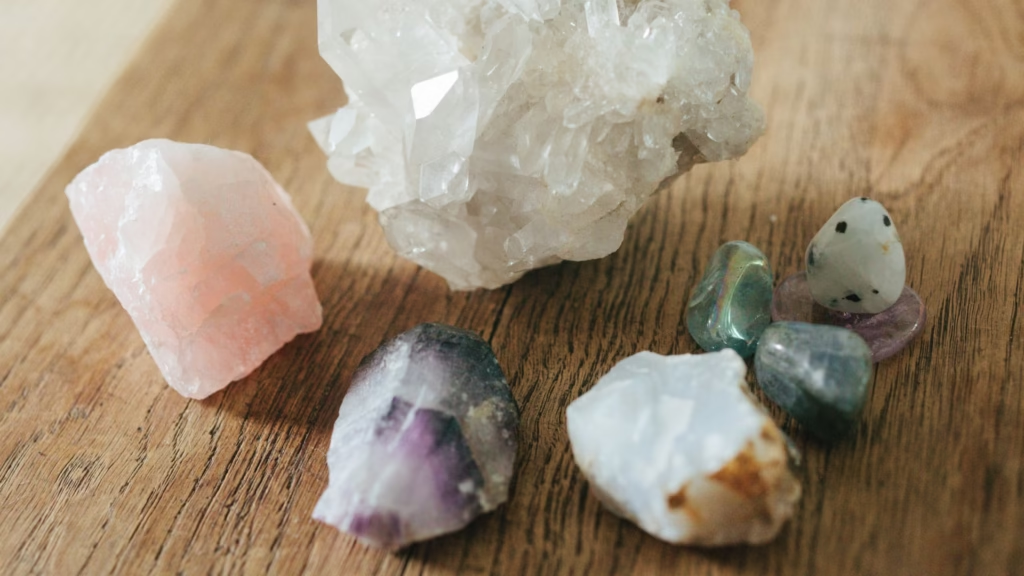
I have loved crystals since I was a child.
There is something beautiful about them, the colours, the weight, the fact that they come straight from the earth. Over the years I picked some up at fairs. I bought a set with a chart. I even bought a book about crystal healing, although I never really used them that way.
I just liked them.
And I think this is how a lot of these things find their way into our homes and lives.
We don’t necessarily choose them because we believe in them.
We buy a crystal because it’s beautiful. We pick up a candle because we like the packaging. We wear a symbol because it’s on a pretty necklace. We make a vision board because everyone says it’s a great way to focus on our goals.
I did vision boards too.
But I always put God in charge of mine. My version was: “This or something better, Lord.” He was the boss. I was just making a list. None of this felt like a big deal to me.
But slowly I started asking myself a different question:
Do I actually know what these things mean and do they fit with what I believe?
That changed the way I looked at things. I didn’t suddenly clear out my house or become frightened of everything with a spiritual meaning. I simply started paying more attention. And choosing more carefully.
Symbols You Might Not Notice in Your Home
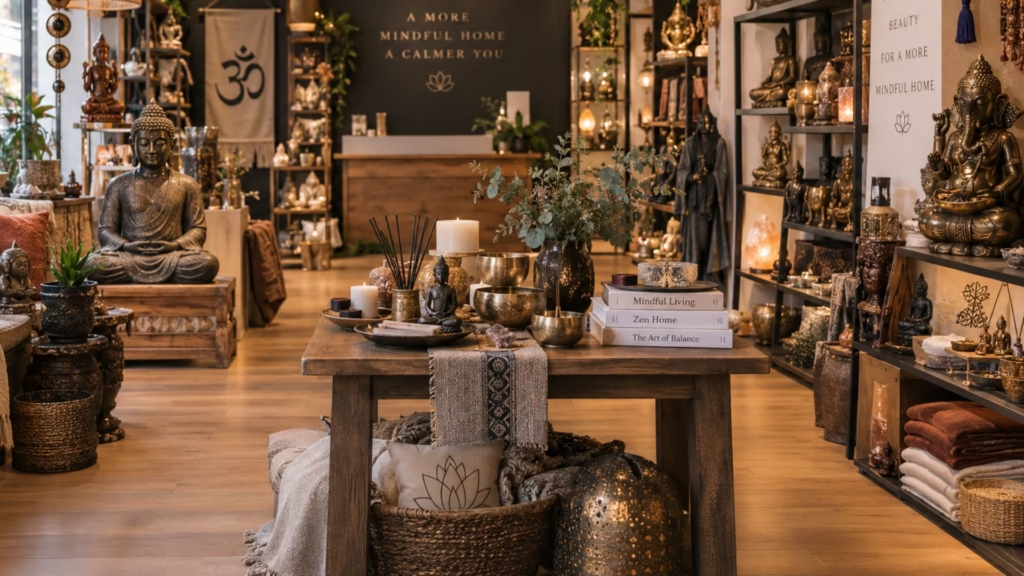
Walk through almost any homeware shop and you will find objects inspired by spiritual and religious traditions from all over the world. The evil eye. The hamsa hand. Crescent moons and sun imagery. Mandalas. Lotus flowers. They appear on cushions, artwork, candles, jewellery and accessories.
Most people probably buy them for one simple reason: They look nice.
And this isn’t about becoming frightened of symbols or assuming that every moon, eye or flower has some hidden spiritual power. Symbols are complicated. Their meanings can change between cultures, religions and periods of history. My Maltese luzzu symbol is a perfect example.
Context matters.
But I still think it is worth understanding what the things in our homes represent particularly when they were originally connected with protection, spiritual power, fortune telling or religious beliefs different from our own.
Then we can make a conscious choice. Not: “I’m scared of this object.” But:
“Is this something I actually want representing me and my beliefs in my home?”
For me, the answer came slowly. Not in one big dramatic moment.
I simply started choosing more carefully.
The Vision Board Question

I want to be honest here because I think a lot of Christian women may be confused by this one. I certainly was.
Vision boards are often connected with manifestation and the Law of Attraction — the idea that your thoughts, focus or energy can attract the things you want into your life.
That isn’t how I understand Christian prayer. We don’t place an order with “the universe”.
We pray to God.
We can ask. We can hope. We can work towards something. We can have dreams and goals.
But ultimately we also say: Your will be done.
Looking back, I can see that this was what I was trying to do with my own vision boards when I wrote:
“This or something better, Lord.” The heart of it wasn’t wrong. I wanted to have goals while allowing God to lead. But eventually I realised that I didn’t actually need the manifestation part at all. There is a much simpler alternative. Write your hopes in a prayer journal. Keep a photograph of something you’re praying about if it helps you remember to pray. Create goals and take practical steps towards them. But leave the outcome with God. The picture doesn’t have power. Your thoughts don’t control the universe.
When Something Just Doesn’t Feel Right
I’ve always been someone who notices when something doesn’t feel quite right. But I’ve also learned that not every uncomfortable feeling is a message from God.
Sometimes we worry. Sometimes we misunderstand things. And sometimes our own fears or past experiences can make something feel wrong when it isn’t.
So if something doesn’t sit right with me, I try not to ignore that feeling, but I also don’t immediately assume it must be a warning from God.
Instead, I stop. I pray. I find out more about it. I look at what the Church teaches. And then I decide what feels right for me and my faith.
This has given me much more peace than either accepting something just because everyone else does it, or becoming afraid of everything I don’t understand.
The Problem Is Never Just the Label
I want to make something very clear. This article isn’t saying: New Age = bad. Christian symbol = automatically good.
Life isn’t that simple. Anything can become unhealthy when it is used to control people, sell false promises or replace good judgement.
- Feng shui followed rigidly can become superstition.
- Crystal healing becomes dangerous when it replaces proper medical treatment.
- The Law of Attraction can become cruel when people are made to believe that their suffering happened because they didn’t “think positively” enough.
But Christians aren’t automatically exempt from getting things wrong either.
- A Christian home isn’t created simply by putting crosses on the walls.
- Christianity can become branding too — all the right symbols with none of the substance behind them.
- A home full of crosses but without kindness, prayer, forgiveness or welcome isn’t expressing very much Christianity at all.
So perhaps the better question isn’t simply: “Is this Christian or not?” It is:
Does the way I’m using this reflect what I actually believe?
Is this drawing me towards God, or am I asking something else to do God’s job?
How to Bless Your Christian Home
A lot of modern wellness content talks about “clearing the energy” of your home. As a Catholic, I have something much simpler.
Holy water.
A while ago I visited a friend’s house and noticed a small holy water font near her front door. She blessed herself as she walked in, just a tiny, quiet gesture. I loved it. It wasn’t an interior design statement. It was simply part of living her faith at home.
In Malta, where my husband’s family is from and where I became Catholic, inviting a priest to bless your home is completely normal. People may do it when they move house, after building work or at other important moments in family life. The priest walks through the home, praying and sprinkling holy water. It isn’t magic. That’s important.
The meaning comes from prayer and from asking God’s blessing on the people who live there. If you’ve never had your home blessed and would like to, ask your local priest or pastor about the tradition in your church.
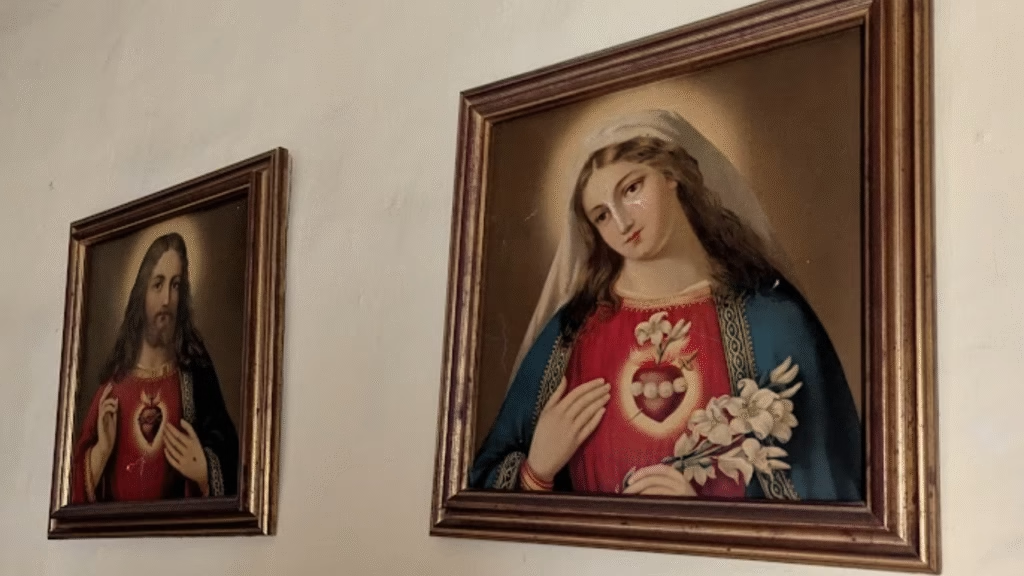
Christian Home Decor That Actually Means Something
My husband’s aunt has a bedroom I have always loved sleeping in. Above the bed are images of Jesus and Mary. Nothing dramatic. Nothing styled for Instagram. Just a few simple things that have clearly been there for years. And somehow the room feels safe and peaceful.
That’s what I want faith in my own home to feel like. Not a shrine in every room. Not religious objects bought simply because I think I should own them. Just small, intentional reminders of what matters.
- A cross at the entrance
Above the door or somewhere in the hallway. For me, it isn’t simply decoration. It is a quiet reminder that faith belongs here too.
- Holy water near the door
A small holy water font can become part of the rhythm of coming home and leaving again.
- Something meaningful in the bedroom
A crucifix. An image of Mary. A rosary beside the bed. Something your eyes can land on at the beginning or end of the day.
- Something in your main living space
Perhaps a candle, a small statue, sacred artwork or a Scripture verse.It doesn’t have to dominate the room. It can work beautifully with the rest of your interior because faith and good design are not in conflict.
A home can be beautifully designed and deeply rooted in faith at the same time. In fact, I think the most meaningful interiors are the ones that tell us something genuine about the people who live there.
Your Christian Home Has a Story, Make It the Right One
Every home tells a story. I see this constantly as an interior designer.
- The photographs people keep.
- The things their children have made.
- The furniture inherited from parents and grandparents.
- The objects brought home from travels.
- The pictures on the walls.
- The things we reach for when we want to feel calm, safe or connected to something bigger than ourselves.
All of it says something about us.
And for Christians, there is another question worth asking:
Does my home reflect what I actually believe?
Or has it slowly filled up with things I chose because they were fashionable, beautiful or popular without ever really thinking about what they meant to me?
This isn’t about fear. It isn’t about creating a strict checklist of “good” and “bad” objects. And it certainly isn’t about throwing away everything you own. It’s about something I already believe strongly as an interior designer:
A meaningful home is an intentional home.
- Choose what you bring into it.
- Understand why it matters to you.
- Surround yourself with things that support the life your family actually wants to live.
And every so often, look around your home and ask:
What story is this home telling, and is it the one I actually believe?
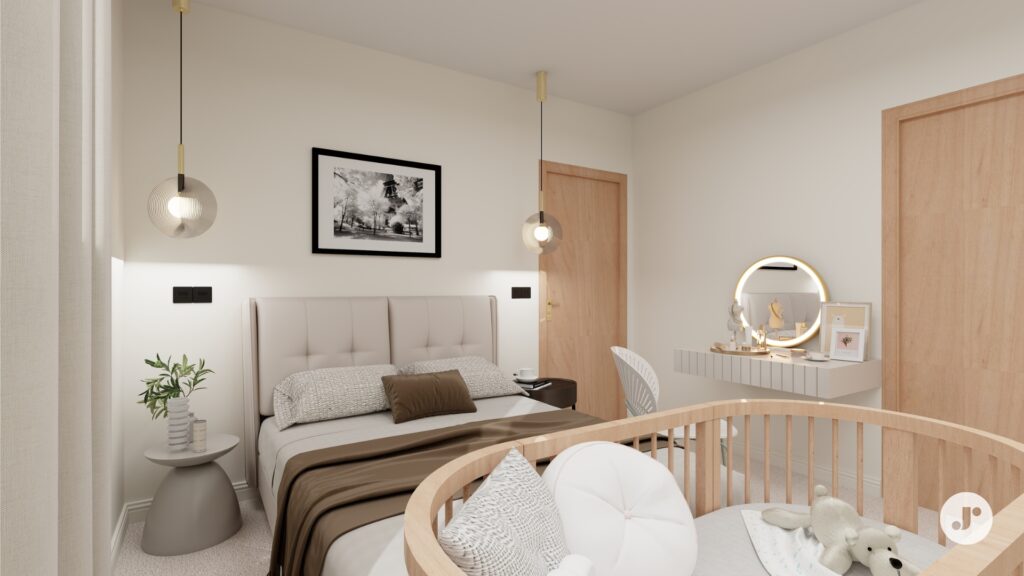
Creating a Home That Reflects Your Family
Good interior design isn’t just about making a room look beautiful. It is about creating a home around the people who actually live there — their routines, needs, personalities and what matters to them.
I help families create thoughtful, practical homes through online interior design and realistic 3D room planning.
Explore my online interior design services →